



Comparison · Direct restorative and adhesion
How to choose a dental composite: universal, bulk-fill, flowable and fibre-reinforced
In this article6
In short
Most clinics need three composites, not ten: a universal nano-hybrid for everyday anterior and posterior work, a bulk-fill for deep posterior boxes, and a flowable for liners, small repairs and cervical lesions. Add a fibre-reinforced composite when you replace dentine in large posterior cavities. Reviews find bulk-fill restorations perform as well as incrementally placed ones, so the choice is about handling and time, not durability.
- A bulk-fill composite is defined by a depth of cure of 4 mm or more per increment; conventional composites are placed in increments of about 2 mm.
- Systematic reviews of posterior restorations report no significant difference in failure rates between bulk-fill and incremental placement over follow-ups up to ten years.
- Flowable composites have lower filler loading and higher shrinkage than packable ones, which is why they suit thin layers, liners and small cavities rather than load-bearing bulk.
- Short-fibre-reinforced composites are intended as a dentine-replacing base under a conventional capping layer, not as the occlusal surface.
- Cure times in this guide are the manufacturers' figures for their stated light irradiance; a weaker light needs longer.
More key facts+3
The problem: too many syringes, and the wrong one in the cavity
A restorative drawer fills up fast: a universal composite in eight shades, two flowables, a bulk-fill someone tried once, a core material, and a syringe of something bought for a single case. The clinical questions are simpler than the drawer suggests. Which class of composite for a deep Class II? For a cervical lesion? For a core under a crown? For a child's molar? This guide answers by cavity type, explains what each class is designed to do, and points to the stocked products for each.
Understand: what separates the classes
Filler and handling
Composites are resin plus glass or ceramic filler. Higher filler loading means a stiffer, more wear-resistant, lower-shrinkage material that is packable; lower loading means a flowable material that adapts to the cavity floor but shrinks more and wears faster. Nano-hybrid and nano-filled universal composites sit in the middle: sculptable, polishable and strong enough for occlusal surfaces.
Depth of cure
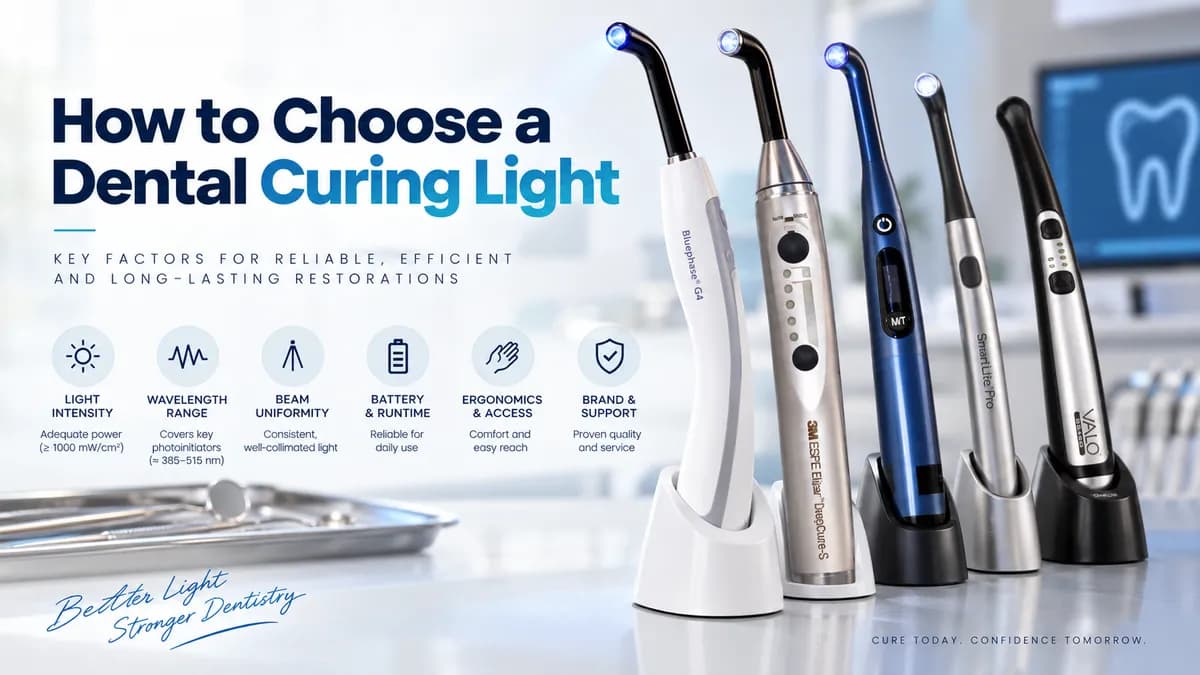
Light reaches only so far into a composite. Conventional materials are placed in increments of about 2 mm because that is the depth a curing light cures reliably. Bulk-fill composites are formulated, through translucency and photoinitiator chemistry, to cure to 4 mm or more in one increment, which is the definition of the class. That depth is claimed for the manufacturer's stated light intensity and time, so the curing light matters as much as the material.
Shrinkage stress
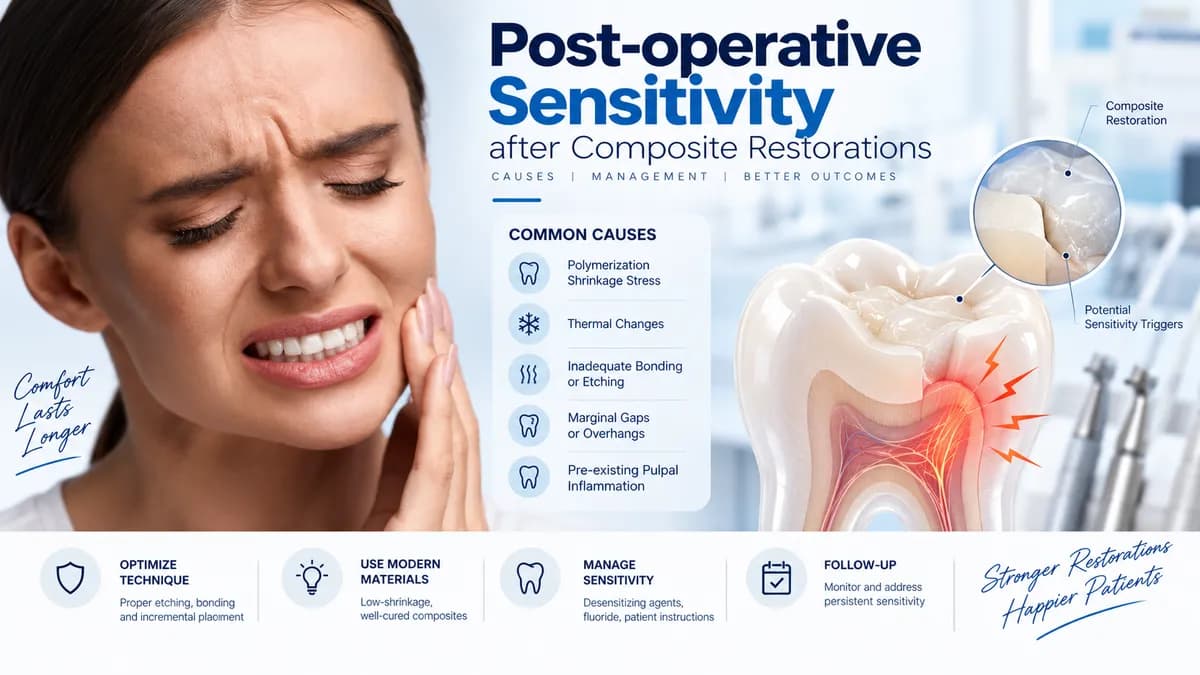
All composites shrink when they cure. The stress that shrinkage puts on the bond depends on the cavity shape and on how much bonded surface each increment has. Bulk-fill materials use stress-relieving chemistry or lower elastic modulus to keep that stress acceptable in a single deep increment; flowables have the highest shrinkage of all and are kept thin.
What the evidence says about bulk-fill
- Evidence. A systematic review and meta-analysis of clinical trials in posterior permanent teeth found bulk-fill composites had survival and clinical performance comparable to conventional composites.1
- Evidence. A second systematic review comparing bulk-fill and incremental placement, with follow-ups from six months to ten years, found no significant difference in failure rates, marginal adaptation, discolouration or post-operative sensitivity.2
- Practice. Bulk-fill saves chair time in deep posterior cavities; the capping layer of a conventional composite is still recommended by most manufacturers for flowable bulk-fills and gives the better polish.
Options: the composite classes we stock
| Class | What it is for | Stocked examples |
|---|---|---|
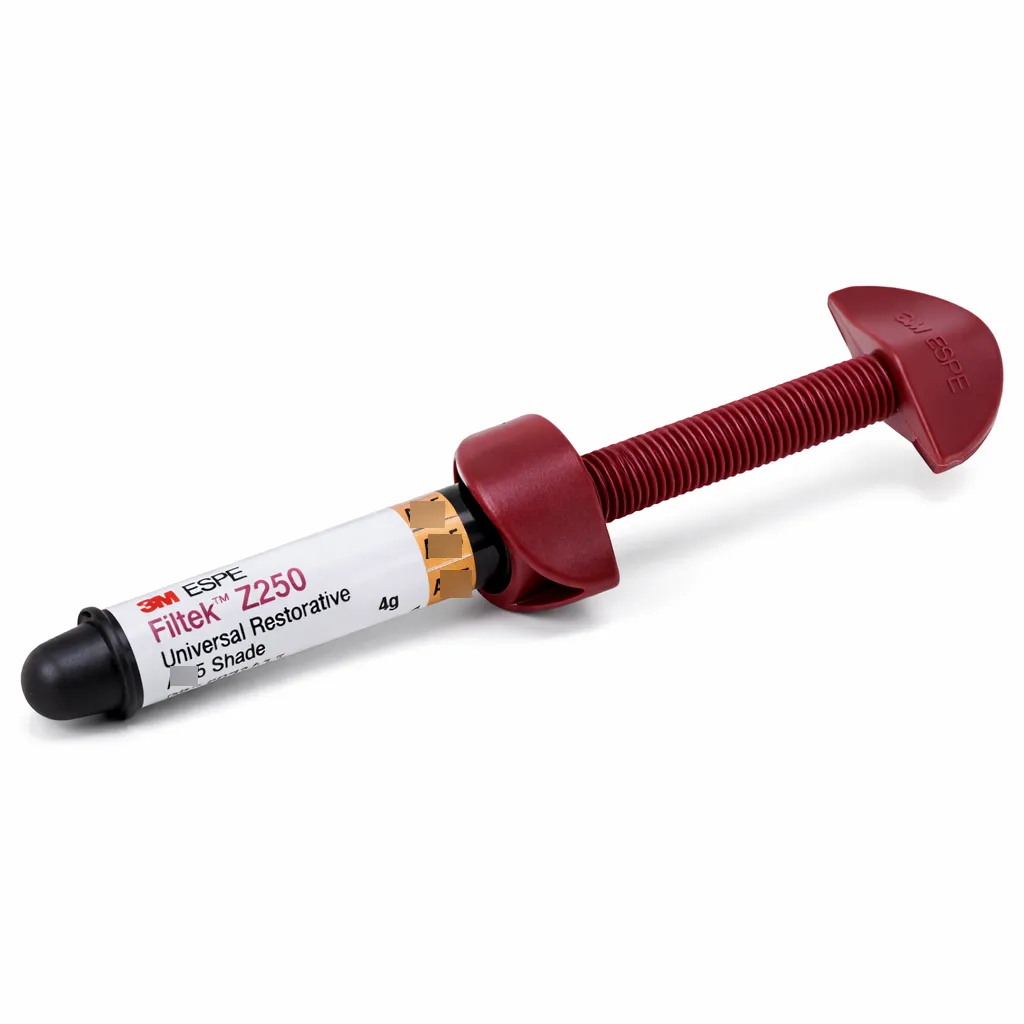
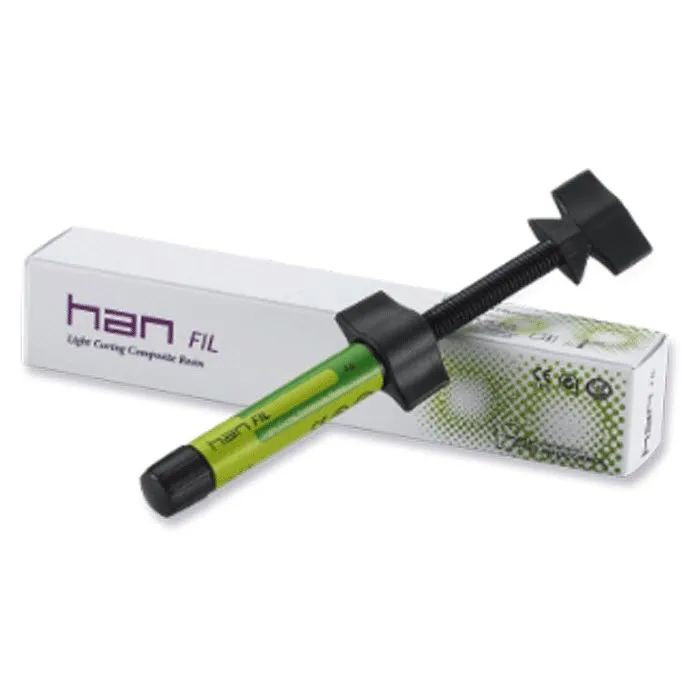
| Universal nano-hybrid | Anterior and posterior restorations of every class; the everyday material | 3M Filtek Z250, Dentsply Neo Spectra ST (HV and LV), GC G-ænial A'CHORD, HanFil Universal |
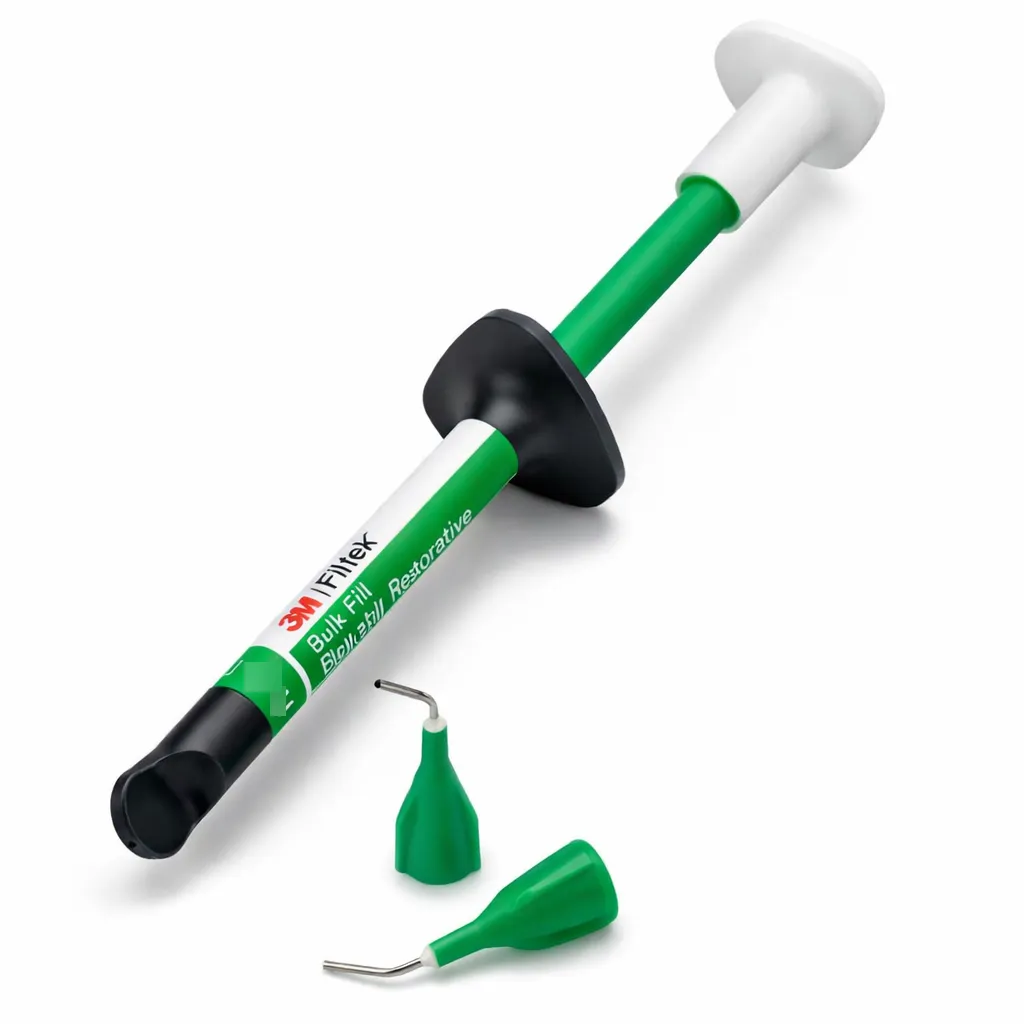
| Bulk-fill, flowable and packable | Deep posterior boxes and cores in one 4 mm increment, usually capped | Dentsply SDR Plus, 3M Filtek Bulk Fill Flowable |
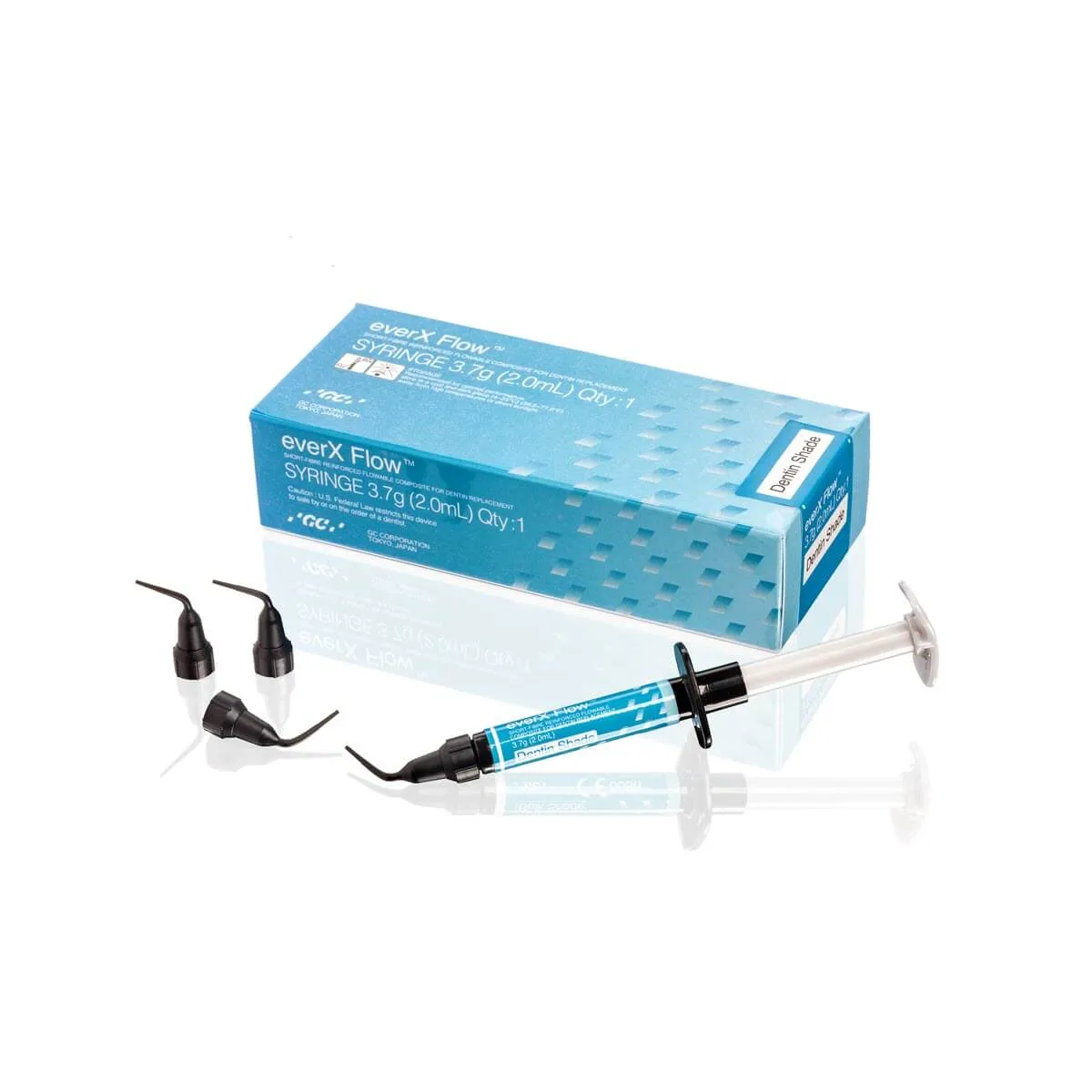
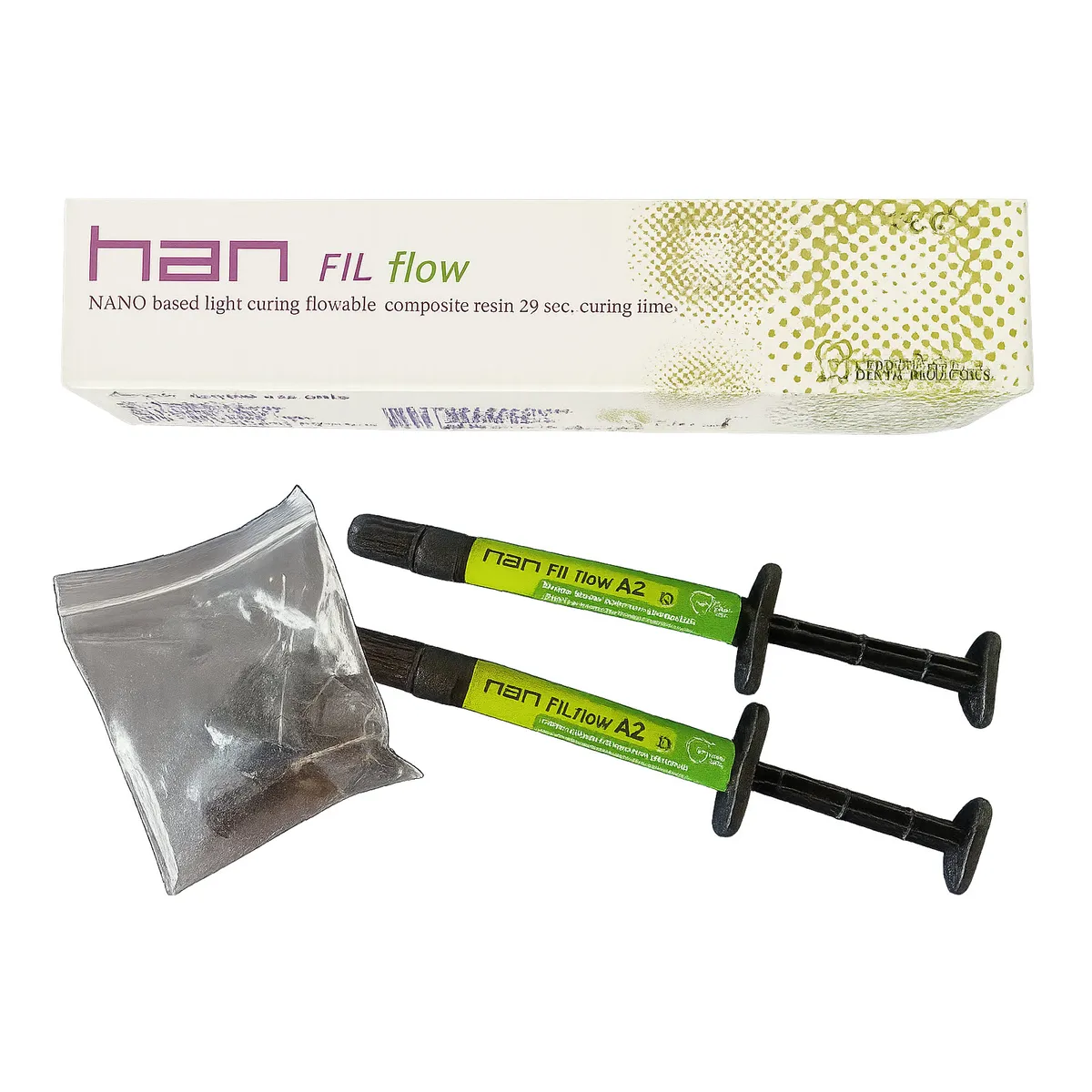
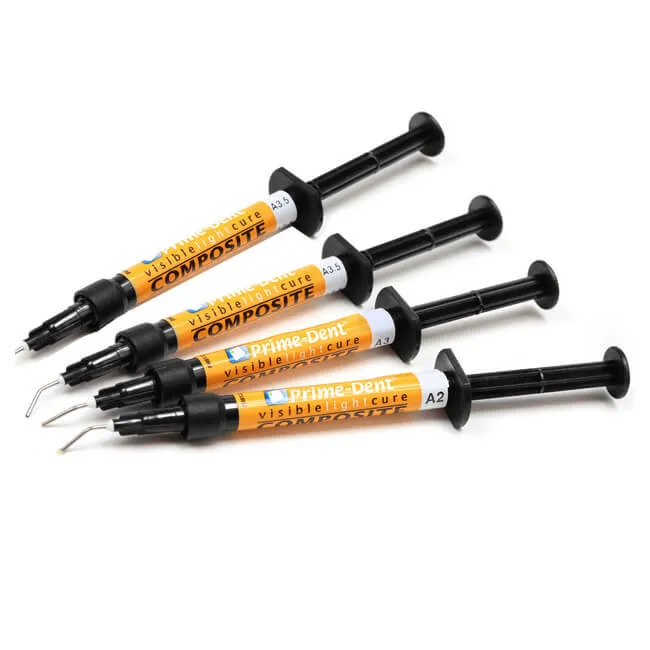
| Flowable | Liners, small Class I and V cavities, repairs, sealing undercuts | HanFil Flowable, Prime-Dent Flowable kit, GC everX Flow (fibre-reinforced flowable) |
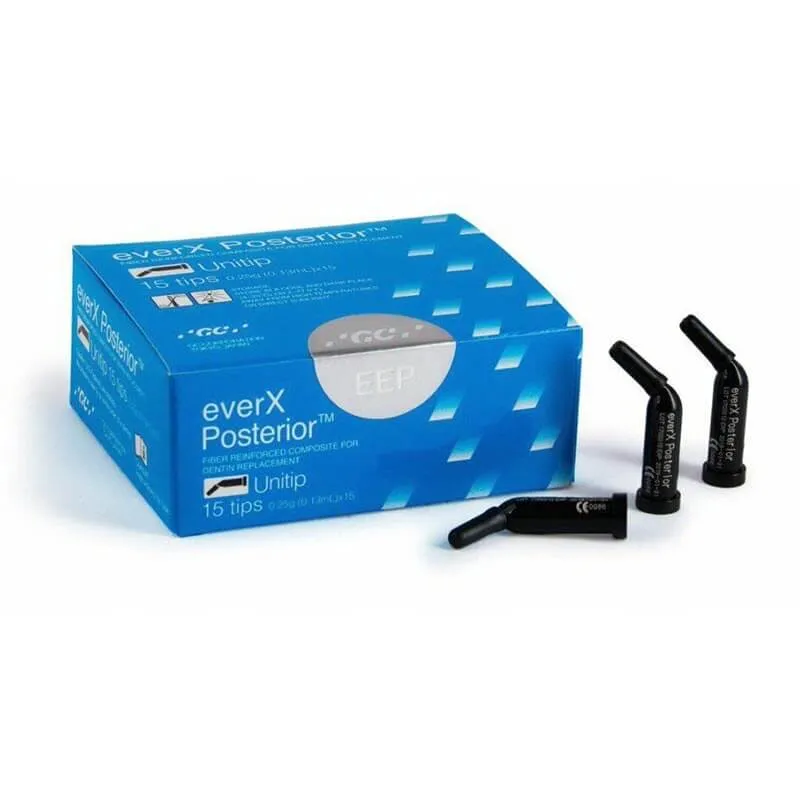
| Fibre-reinforced | Dentine replacement in large posterior cavities and cusp replacement, under a capping layer | GC everX Posterior, GC everX Flow |
| Core build-up | Cores under crowns, often dual-cure for depth where light cannot reach | CharmCore Dual-Cured, Build-It FR, Fusion Core DC Flo |
Shop the categories in this guide
Compare: by cavity type
| Cavity | Recommended class | Increment and cure (manufacturer figures) | Stocked pick |
|---|---|---|---|
| Class I or II, moderate depth Practice | Universal nano-hybrid | 2 mm increments, cure per shade and product, typically 10 to 20 s | Filtek Z250 or Neo Spectra ST |
| Class II, deep box (over 4 mm) Evidence | Bulk-fill base plus universal cap | One 4 mm increment of bulk-fill, then a 2 mm cap | SDR Plus with Neo Spectra ST cap |
| Large cavity with lost cusp or thin walls Manufacturer | Fibre-reinforced base plus universal cap | Up to 4 mm of fibre-reinforced composite, then 1 to 2 mm cap | everX Posterior with Filtek Z250 cap |
| Class III or IV anterior Practice | Universal nano-hybrid, layered enamel and dentine shades | Thin layers; polish with a dedicated kit | G-ænial A'CHORD layering kit |
| Class V cervical, non-carious Practice | Flowable or low-viscosity universal | One or two thin increments | HanFil Flowable or Neo Spectra ST LV |
| Core under a crown Manufacturer | Dual-cure core material | Bulk placement; self-cure reaches where light cannot | CharmCore Dual-Cured A3 |
| Primary molar Practice | Universal or bulk-fill, or glass ionomer in high caries risk | As above; see the glass ionomer comparison | SDR Plus or a glass ionomer |
Choose a universal nano-hybrid as the one syringe the clinic cannot do without. Add a bulk-fill if deep posterior boxes are a regular part of your day. Add a flowable for liners and small cavities, and a fibre-reinforced composite only if you routinely rebuild large posterior teeth.
Recommended products
Universal composites, the everyday syringes:

Bulk-fill, flowable and fibre-reinforced materials for the deep and the difficult:

Flowable and core materials:

Buying advice
A three-syringe standard covers most practices: one universal nano-hybrid in the four or five shades you actually use, one bulk-fill, one flowable. Buy the adhesive from the same manufacturer where you can, and check that your curing light delivers the irradiance the bulk-fill's instructions assume. The finishing kit is part of the system: a well-chosen composite polished badly looks worse than a modest one polished well.
Frequently asked questions
Is bulk-fill as durable as layered composite?
Systematic reviews and meta-analyses of clinical trials found comparable failure rates, marginal adaptation and post-operative sensitivity between bulk-fill and incrementally placed composites in posterior teeth. The time saving is real; the durability penalty is not supported by the evidence so far.
Can a flowable composite be used for a whole posterior filling?
Conventional flowables are not intended for occlusal load-bearing bulk. Flowable bulk-fill materials are designed as a base up to 4 mm and are capped with a conventional composite. Follow the product's stated indications.
What does a fibre-reinforced composite add?
Short glass fibres raise the material's fracture toughness, so it is used to replace lost dentine in large cavities and cusp-replacement cases as a base under a capping layer. It is not an aesthetic surface material.
Which shade system should the clinic standardise on?
Most universal composites use the Vita classical shades (A1 to D4). Nano-hybrids with fewer, cluster shades reduce inventory; some single-shade products adapt to the surrounding tooth for posterior work. Keep the shade guide of the composite you use, not a generic one.
Do capsules or syringes matter?
Capsules give a fresh, uncontaminated unit dose and work with a dispensing gun; syringes cost less per gram. Composition is the same within a product line.
Sources
- Clinical performance and survival of bulk-fill resin composites compared to conventional composites in posterior permanent teeth: systematic review and meta-analysisEvidence
- The clinical performance of bulk-fill versus incremental layered application of direct resin composite restorations: systematic reviewEvidence
- Light-curing dental resin-based composites: how it works and how you can make it workEvidence
- SDR Plus bulk-fill composite, Dentsply Sirona product informationManufacturer